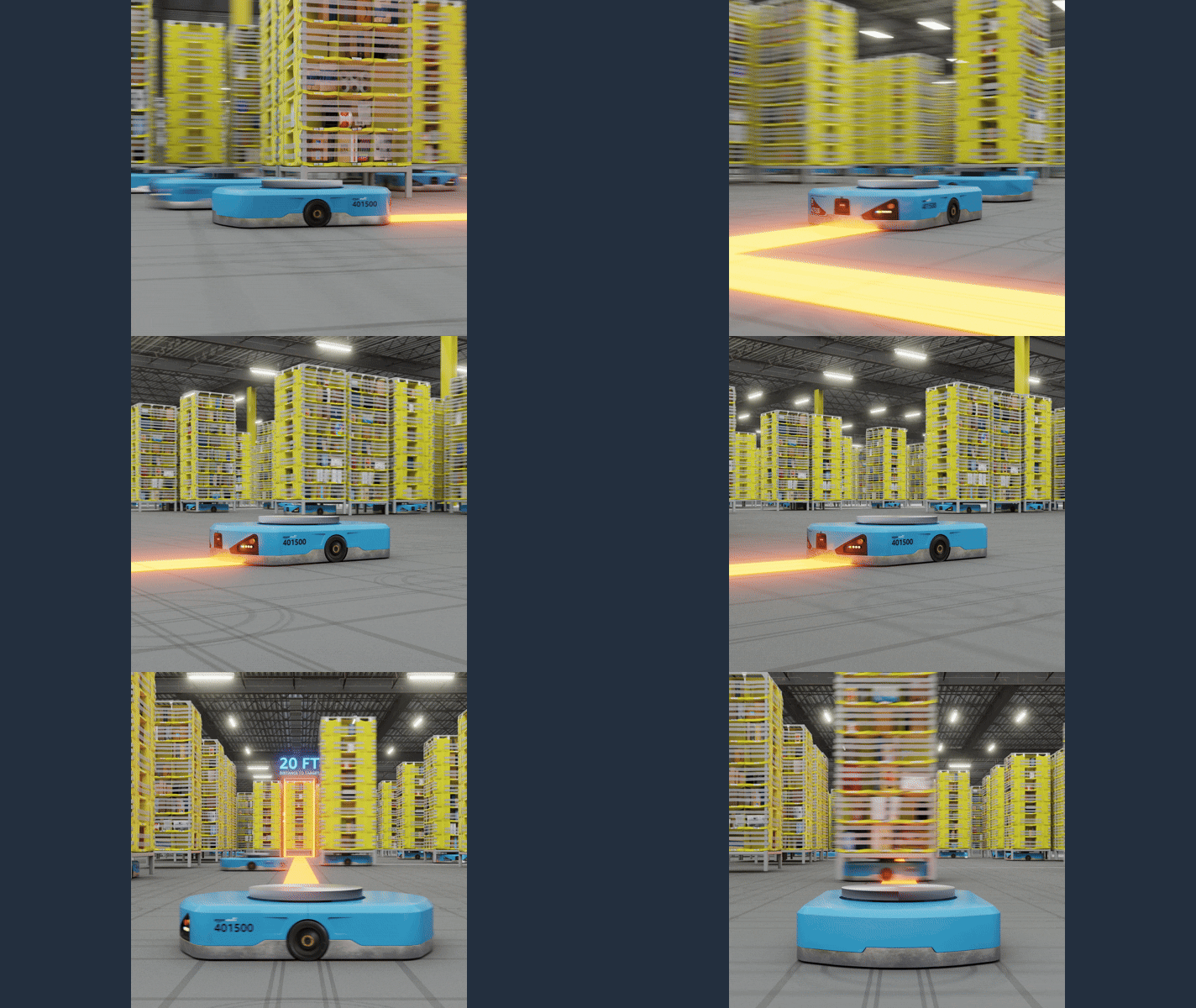
Amazon announced DeepFleet on June 30, 2025 alongside its millionth deployed robot. The company described a model trained on inventory movement and intended to coordinate robot travel across its facilities. This is a different scale of autonomy from obstacle avoidance: a locally efficient route can still contribute to a globally inefficient traffic pattern. Amazon DeepFleet announcement.
One robot moving through a building can look effortless. Several robots sharing a narrow passage or an elevator create a different problem: each locally reasonable plan may conflict with the others. Fleet autonomy therefore needs a view of shared resources, priorities, and recovery. Better navigation on each machine does not automatically settle those relationships.
Open-RMF describes a modular, open-source framework for interoperability between multiple fleets and physical infrastructure. Its project page, accessed October 11, 2026, specifically names doors, elevators, and building-management systems. This makes the surrounding facility an explicit part of the automation problem. Open-RMF project.
Coordinate the scarce resource
Our analysis would start by listing what cannot be used by everyone at once. That could be a loading bay, a narrow corridor, or a charging point. Assign a clear policy for access and a way to release reservations after failure. Without those rules, a stalled robot can create an operational problem larger than its own incomplete task.
ViNT's June 26, 2023, paper studied transferable visual navigation across robot datasets. It represents progress at a different layer: helping an individual machine move effectively. That distinction is useful because fleet scheduling and local navigation need separate tests even when they are tightly integrated. ViNT paper.
Test congestion and recovery
We would run a fleet trial with simultaneous requests, one unavailable resource, and an interrupted robot. Measure completed missions and waiting time as well as distance traveled. A useful fleet system should explain why a robot is waiting and which event will unblock it. That visibility makes coordinated autonomy something an operations team can manage.
A fleet is a network of dependencies
A warehouse robot rarely moves for its own sake. It brings goods to a person, a station, another robot, or a shipping process. The value of the trip depends on what is ready at the destination and what other trips compete for the same space. A short route that arrives at a blocked station can be less useful than a longer one that preserves a continuous flow.
This is why fleet performance cannot be inferred by multiplying a single robot’s speed by the number of machines. Intersections, charging points, pick faces, and handoff locations become shared resources. Adding robots can increase throughput, but it can also add waiting. The coordination system determines which effect dominates under a particular workload.
Locus’s system takes another route to the same problem
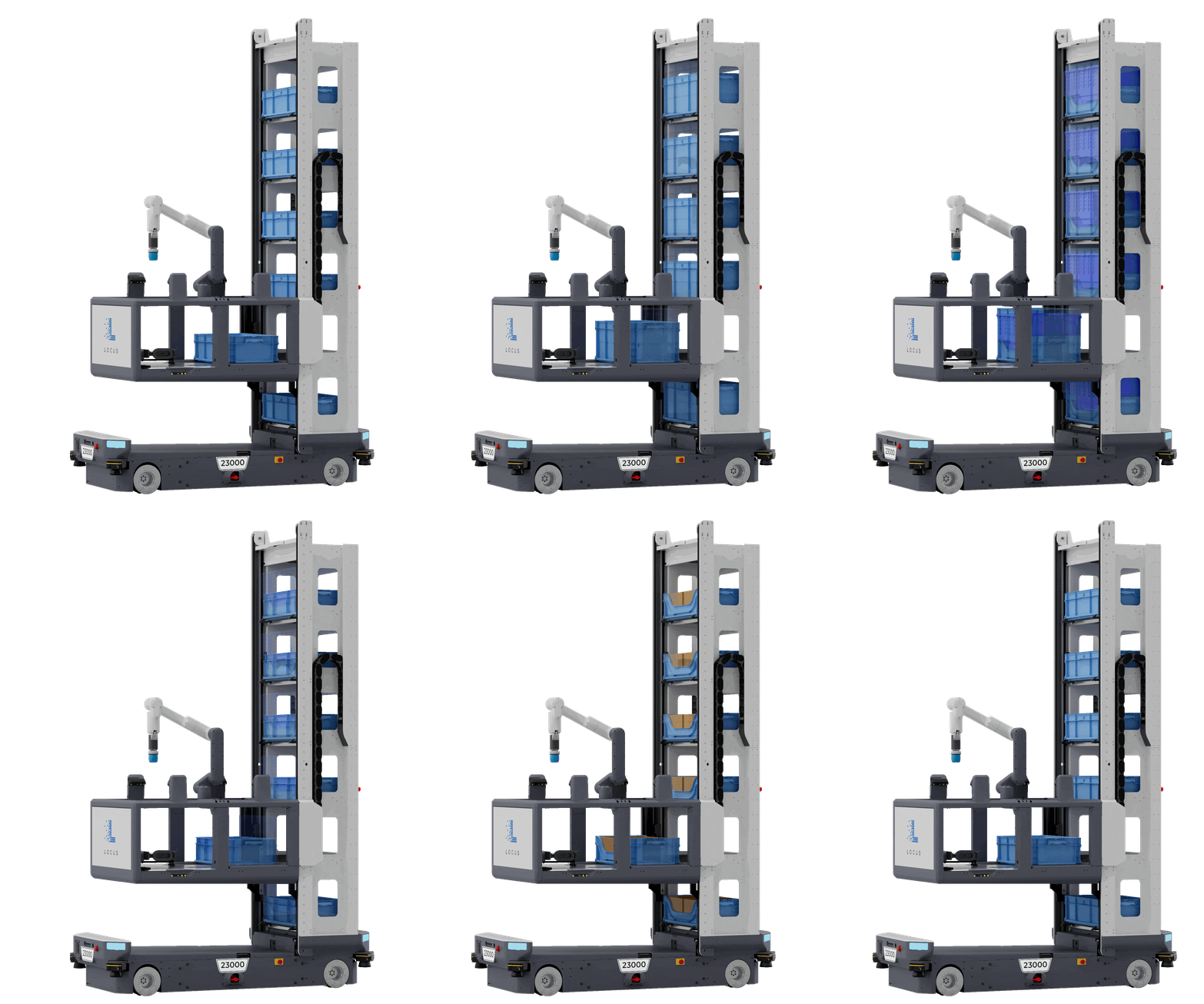
The Array launch described LocusONE assigning work across Array, Origin, and Vector. The company’s broader coverage claim depended on that combined system, not on every individual robot handling every item. This is an important distinction: specialized machines can contribute to a flexible operation when the orchestrator understands their different capabilities and constraints. Locus Array launch.
Interoperability does not imply identical behavior
Open-RMF, discussed below, is relevant because real buildings contain shared resources and potentially different robot fleets. A common coordination layer can make those interactions more legible. It does not erase differences in braking, load handling, sensing, or the ability to recover from an obstruction. The information exchanged must remain meaningful for the machines that receive it.
A fleet manager can reserve a route while a local controller handles immediate motion. That division works only if the reservation reflects what the robot can actually do. A delayed arrival, changed load, or blocked corridor may invalidate an earlier plan. The system needs current status and a way to revise commitments without leaving other participants acting on stale assumptions.
The meaningful metric is completed flow
Travel efficiency is a useful measure, but it is not the entire business result. A warehouse can reduce travel while increasing time spent waiting for picks, charging, or resolving exceptions. Conversely, a deliberate pause can improve overall throughput by preventing a congested crossing. The metric must match the operation’s objective rather than reward movement for its own sake.
This also limits comparisons between vendor announcements. Different buildings, inventory mixes, and handoff processes produce different bottlenecks. A percentage improvement within Amazon’s operation cannot establish an equivalent benefit in another deployment. It is evidence that coordination is a valuable optimization target at scale, not a universal conversion factor from robot count to productivity.
DeepFleet and Locus’s coordinated system show the industrial direction clearly. The intelligence increasingly resides in the relationship between robots as well as inside them. The most capable fleet is the one that can make useful compromises: yield space, delay a low-priority move, preserve access, and keep the next stage supplied. Those decisions make autonomy visible in completed work rather than in the speed of a single machine crossing the floor.
The research context
Open-RMF describes an open framework for coordinating multiple fleets with shared infrastructure such as doors and lifts. Its relevance is that a mobile robot does not own every resource on its route. The robot can request access, but the broader system must schedule and communicate that access. In a warehouse, similar dependencies appear around charging, crossings, and workstations. A local navigation policy cannot infer every commitment made elsewhere in the operation. Shared coordination therefore adds a different kind of intelligence: maintaining a consistent account of who can use which resource and when. The result is useful even without a more sophisticated individual robot, because it reduces conflicts between otherwise competent machines. Original research source.
Sources & evidence
This archive preserves its original editorial date. Sources describe the events and announcements discussed; they do not establish today’s status.