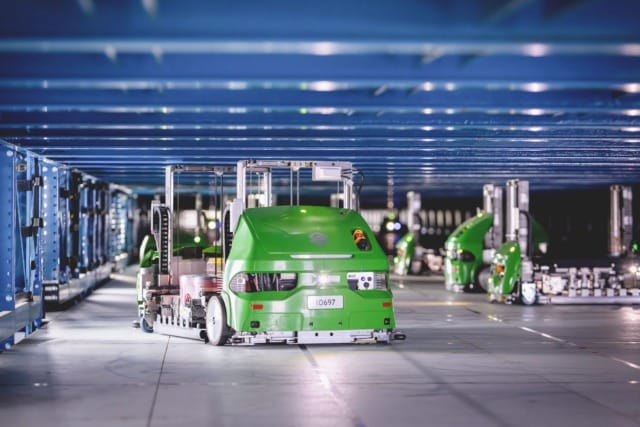
Symbotic announced its acquisition of ARMS Innovations on July 2, 2026. The UK software company specializes in real-time operational intelligence for automated warehouses. Symbotic described the deal as a way to connect equipment and human workflows, including maintenance and disruption handling. Those integration benefits were the announced strategy, not independently demonstrated results of the combined product. Symbotic acquires ARMS Innovations.
A robot that completes most demonstrations may still consume too much operator attention to be useful. Waiting for a reset, clearing an object, and diagnosing an ambiguous state all affect the work delivered. Deployment economics therefore need a measure of human assistance alongside throughput. Autonomy is partly about how often the process can continue without that assistance.
PI-QT-Opt, submitted October 15, 2022, studied predictive-information learning for multi-task robotic reinforcement learning. The authors evaluated multiple skills and real-robot settings. Its task results are research evidence; they are not a substitute for measuring uptime, maintenance, and interventions over a customer's operating schedule. PI-QT-Opt paper.
Count the support burden
In our analysis, a trial should record every intervention, its cause, and the time until work resumes. Separate planned replenishment from unexpected recovery, but count both in the operating picture. A hypothetical sorting cell may have excellent pick accuracy while requiring frequent human clearing. The business needs to know that before relying on unattended operation.
IFR's September 24, 2026, release reported a global industrial robot stock of five million for 2025. That scale underlines the relevance of practical operations, but installation counts do not establish how much supervision any particular machine or learned policy requires. IFR World Robotics 2026 release.
Test a full work cycle
We would extend evaluation beyond the clean demonstration to include startup, shift changes, replenishment, and shutdown. Report accepted output per operating hour and per hour of human support. These measures make autonomy comparable with the existing process. The strongest deployment case is not a robot that never asks for help; it is a system whose help requirements are predictable, manageable, and justified by the work it completes.
A robot can work while the operation waits
Uptime is easy to oversimplify. An individual robot may be available while its destination is blocked, its input is missing, or the person needed to resolve an exception is elsewhere. The machine’s status does not fully describe the readiness of the workflow. A warehouse depends on coordinated resources, and failures can propagate without every component breaking.
This is why operational intelligence is a meaningful acquisition target for a robotics company. Knowing that a system has stopped is different from knowing what caused the stop, what work remains possible, and who can restore the missing capability. The value comes from turning information into a timely, appropriate response.
HelloFresh supplies a physical example
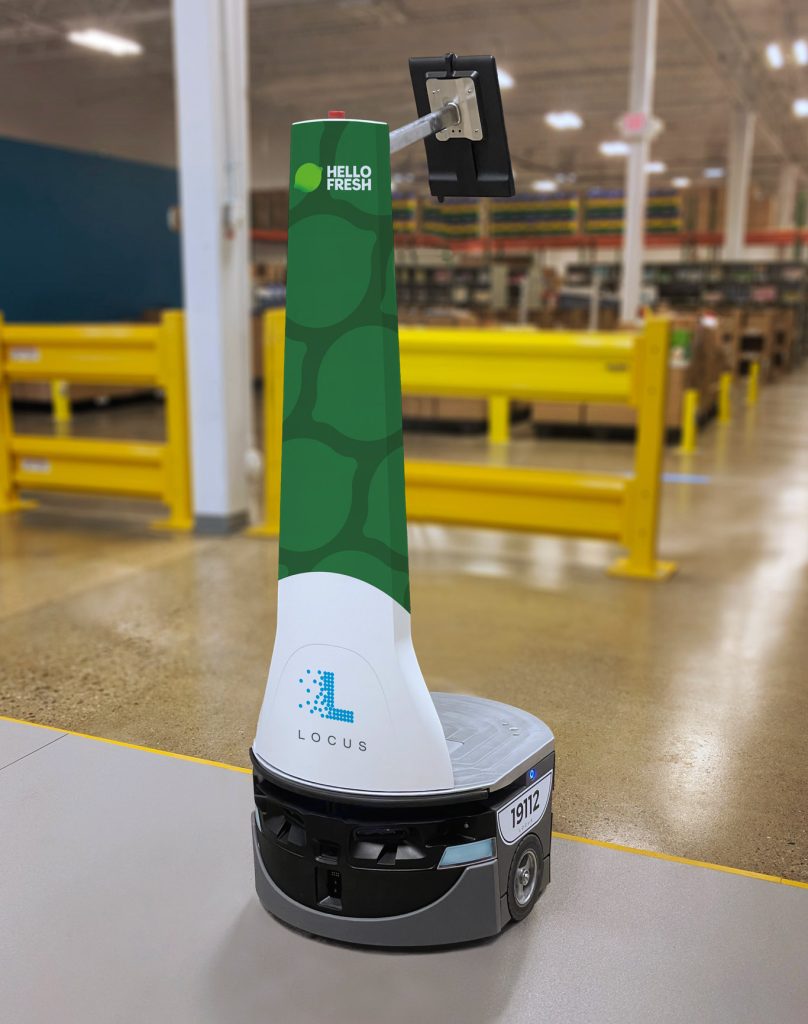
Locus Robotics’ June 23, 2026 HelloFresh announcement described a cold-storage modification for Origin robots, including motor heating and charging changes. The company reported a pilot of 13 robots in July 2025 followed by 26 more within three months. These are vendor-reported deployment details, but they show that sustained operation can require hardware adaptation beyond navigation software. Locus HelloFresh deployment.
The availability problem spans layers
The PI-QT-Opt work discussed below concerns learning useful behavior from robot experience, while the IFR data describes a growing industrial installed base. Between learning and installed machines lies a continuing operational burden: batteries, sensors, mechanical wear, network services, inventory availability, and maintenance staffing all affect what the system can deliver.
A deployment can therefore improve its practical output without changing the robot’s nominal skill. Shorter diagnosis, better scheduling, or a clearer escalation path can recover capacity that was previously lost to waiting. Conversely, a stronger manipulation model may contribute little if another bottleneck dominates. The meaningful measure is completed work across time, not peak performance under ideal conditions.
The acquisition creates a testable ambition
Symbotic’s announced direction brings people into the autonomy story in a concrete way. Maintenance and exception handling require skills, tools, access, and decisions. Coordinating those resources can be as important as coordinating robot routes. But software that assigns a task must have an accurate view of the situation; an incorrect diagnosis or unavailable technician can simply move the delay to another queue.
The evidence to watch is therefore operational: whether disruptions are recognized earlier, whether the correct response is assigned, and whether the combined system restores useful flow more reliably. Those outcomes cannot be inferred from the acquisition announcement alone. They depend on integration and on the quality of the information the system receives.
The deal is significant because it recognizes that warehouse autonomy extends beyond motion. A robot platform becomes more useful when the surrounding operation can absorb failures and recover. The next stage of the story is whether Symbotic can turn that broader visibility into better, measurable uptime across different customer environments.
The research context
PI-QT-Opt’s October 2022 research added predictive-information learning to reinforcement learning and evaluated robot behavior across a broad task collection. That research concerns what the policy can learn from experience. The uptime problem extends beyond the policy into the conditions that make experience and action possible. A disconnected sensor, depleted battery, or unavailable workstation is not necessarily a deficit in learned intelligence. It may be a coordination or maintenance problem. Distinguishing those causes is useful because each implies a different intervention. Replacing the model will not repair an unsuitable charging arrangement, while adding maintenance staff will not correct a systematically mistaken grasp policy. Operational visibility helps direct effort to the layer that actually failed. Original research source.
Sources & evidence
This archive preserves its original editorial date. Sources describe the events and announcements discussed; they do not establish today’s status.